

A single Ra value does not tell the whole story
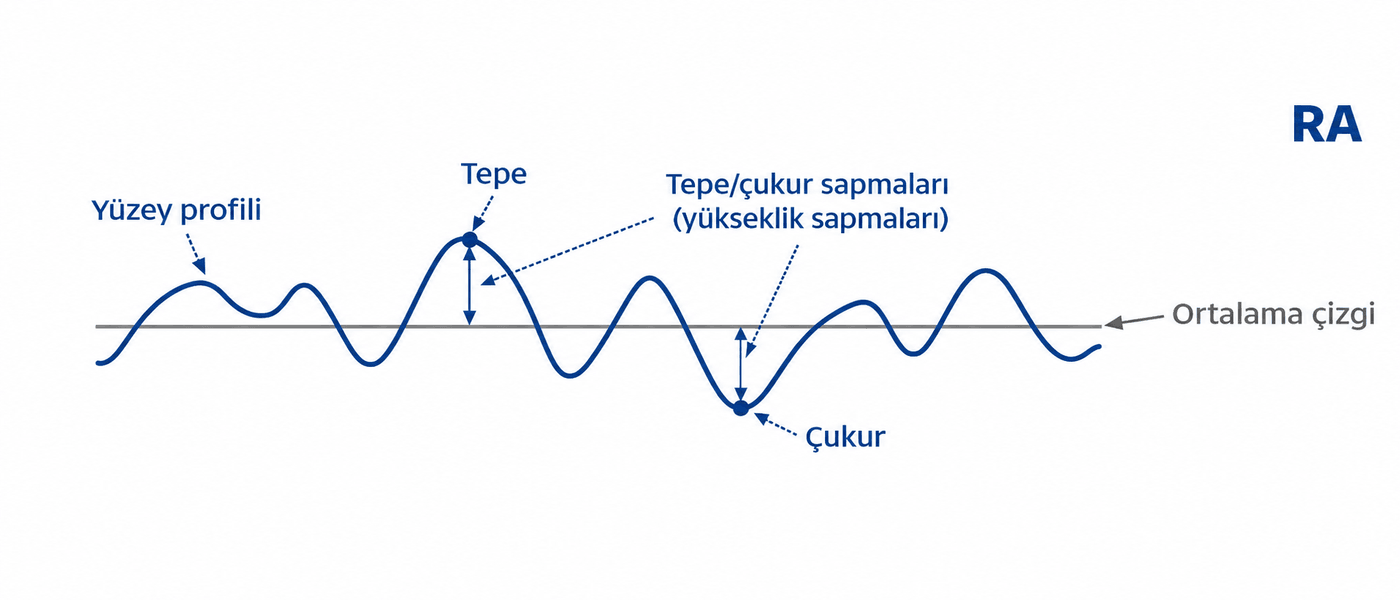
Ra is the best-known parameter summarising the general micro-roughness of a surface. It expresses the arithmetic mean of the absolute deviation of peaks and valleys on the profile. On a critical contact surface, however, a single deep scratch anywhere on the surface can be functionally important; such a defect can be lost within the Ra value.
What do Rz and Rt add?
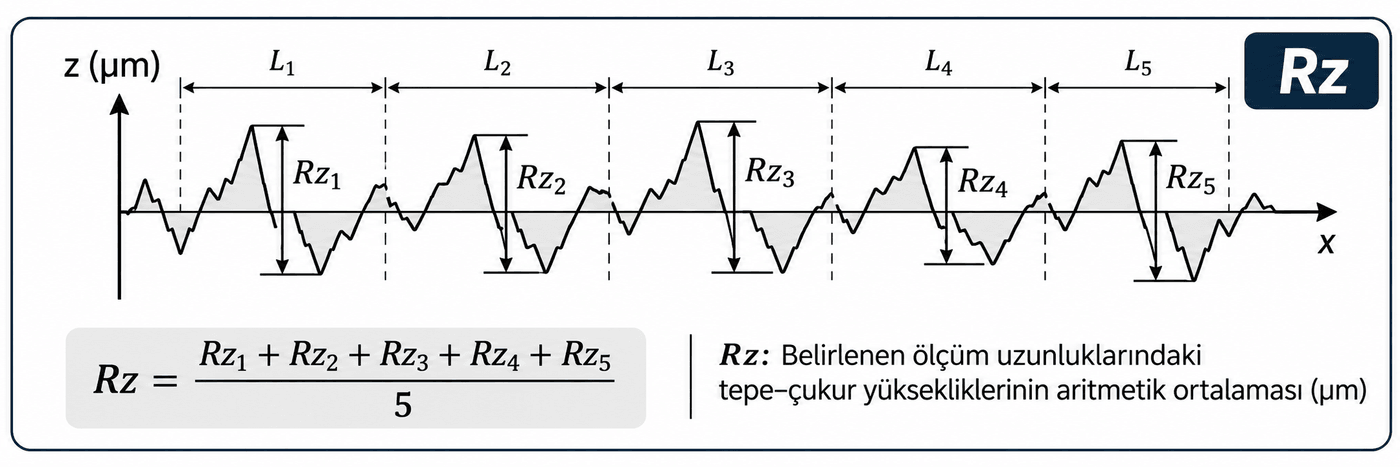
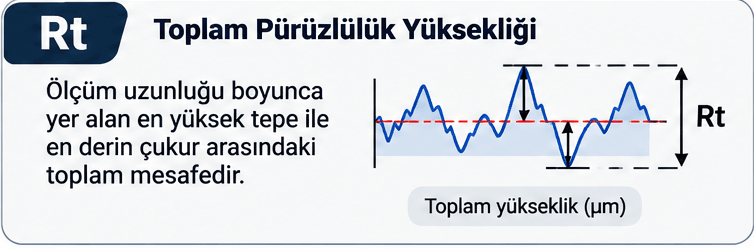
Rz and Rt give more information about the maximum height characteristics of the profile. Rt relates to the difference between the highest peak and the deepest valley over the entire evaluation length. The term Rz, on the other hand, is used with different definitions in different versions of the standard, so the reference standard must be known when comparing reports.
Why is Rq sometimes more meaningful?
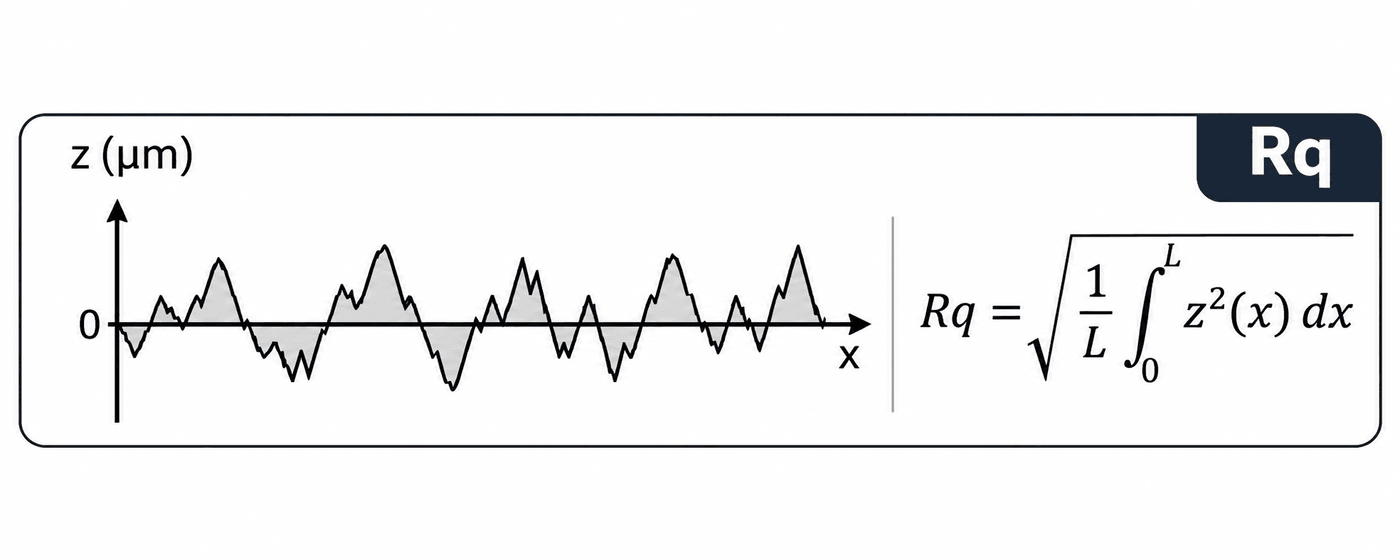
Because Rq evaluates profile deviations by squaring them, it is more sensitive than Ra to some extreme values. This can be useful on surfaces where individual large profile deviations matter. Even so, Rq alone does not cover all functional requirements.
Do not compare numbers without the measurement conditions
When comparing the Ra values of two parts, the measuring instrument, filtering, tracing direction, sampling/evaluation length and which surface was measured must be taken into account. The methods must be consistent for the value written on the technical drawing to be comparable with the measurement in the laboratory.