

Lapping and grinding are both processes based on abrasive material removal, but the way the abrasive works can differ. In conventional lapping, loose abrasive grains work together with a fluid and a lapping plate. In double-sided grinding, the abrasive grains are held in the bond of two opposing grinding wheels. It is possible to run two different processes on the same machine family or with a similar carrier geometry; this does not make the mechanism the same.
Double-sided grinding can be a powerful method especially when a part needs to approach a target thickness and stock must be removed from two opposing surfaces together. Lapping may be preferred for reducing micro-irregularities on the surface and for certain precision finishing requirements. Which process comes to the fore depends on the part material, the initial surface quality, the stock to be removed and the functional tolerance. Some parts can meet the requirement with double-sided grinding alone; others need lapping after grinding.
The difference between a grinding wheel and a lapping plate
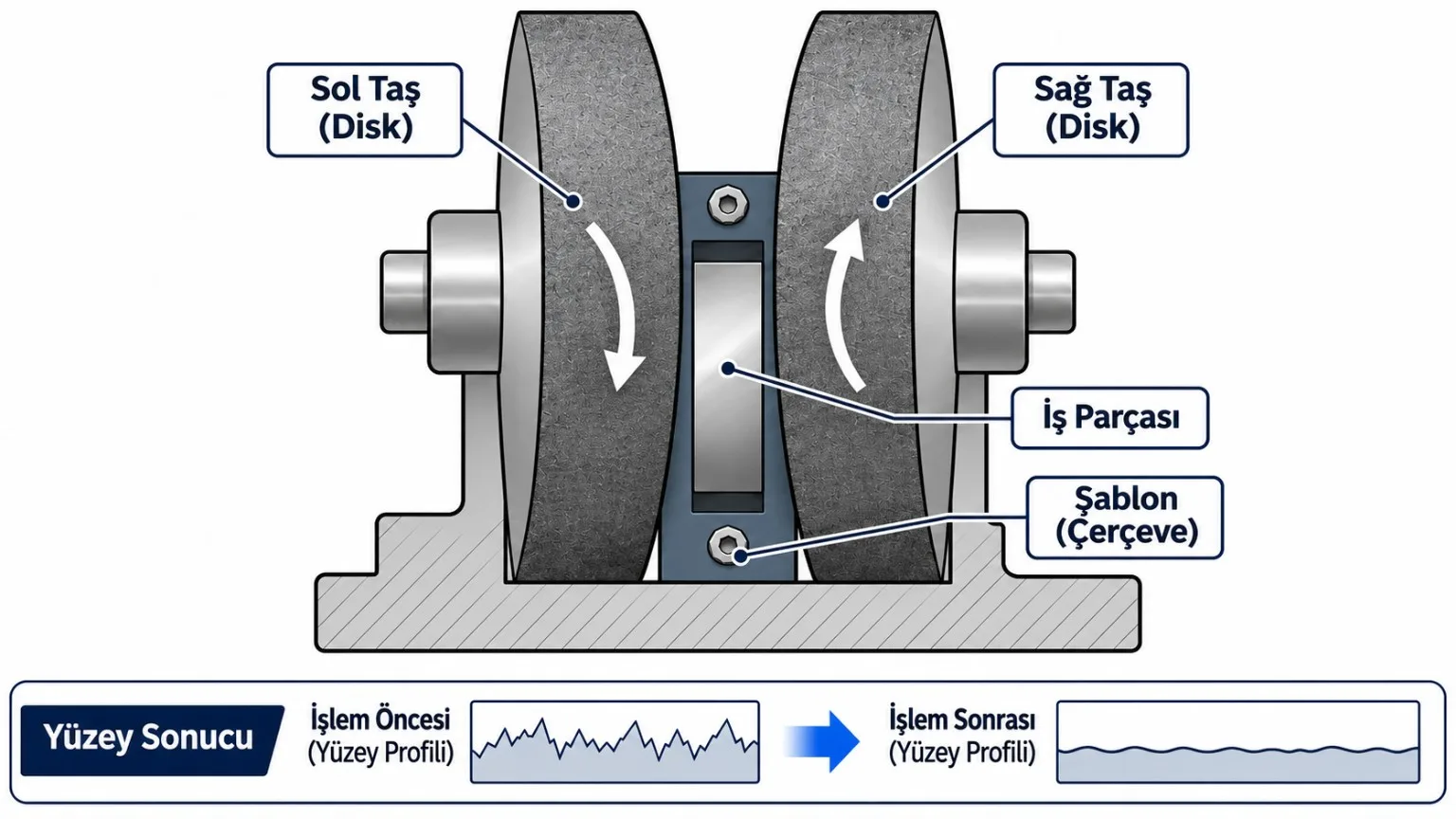
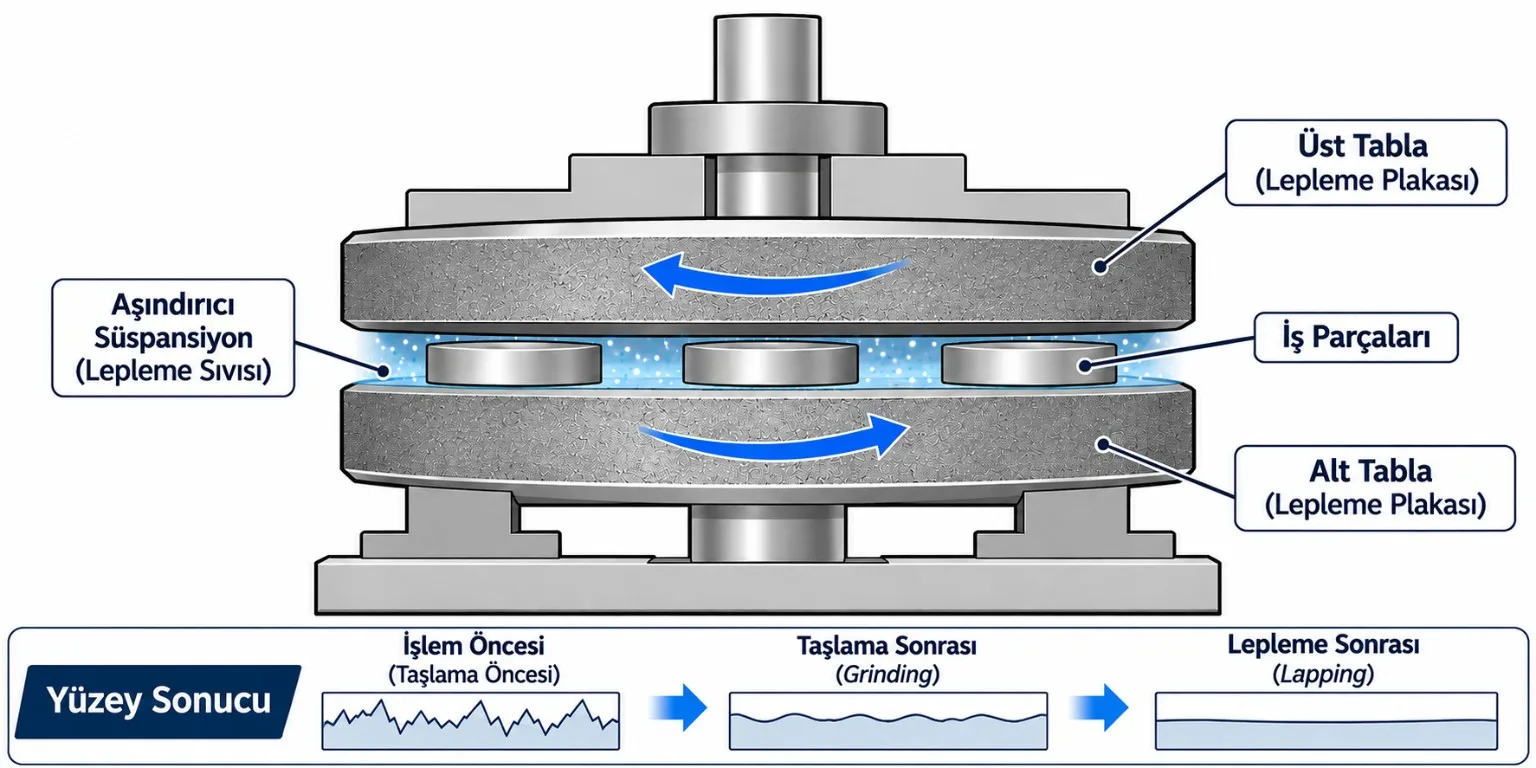
A double-sided grinding wheel is a machining element in which the abrasive grains are held in a bonded structure. Double-sided lapping, by contrast, may involve upper/lower lapping plates and a loose abrasive slurry. Some modern systems also have fine grinding plates with fixed abrasive; the decisive distinction is not the name of the machine but the actual material removal mechanism.